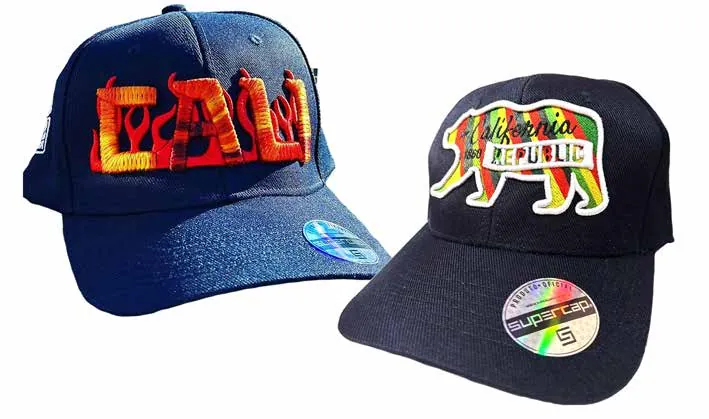
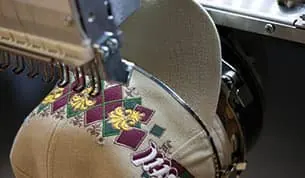
3D puff caps
Foam under satin stitch lifts the logo off the cap. The streetwear look customers gladly pay more for.
Same shop. Same click. But the product arrives with texture, depth and a price tag print can’t reach. This is where printers learn to think in thread.
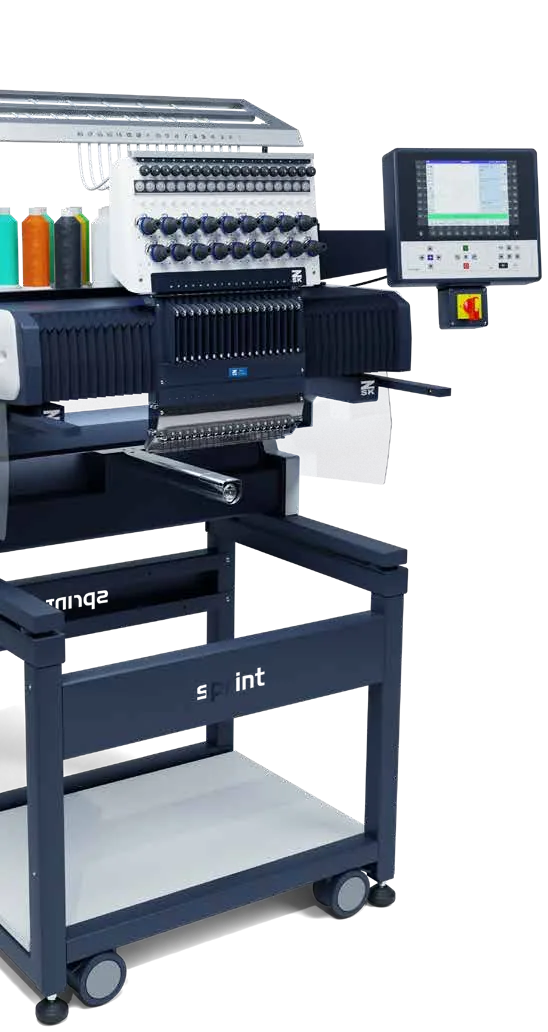
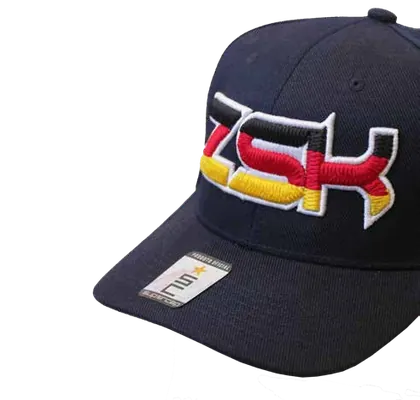
Embroidery opens product categories and price points that ink never reaches. A few ideas – all made on ZSK machines.
Foam under satin stitch lifts the logo off the cap. The streetwear look customers gladly pay more for.
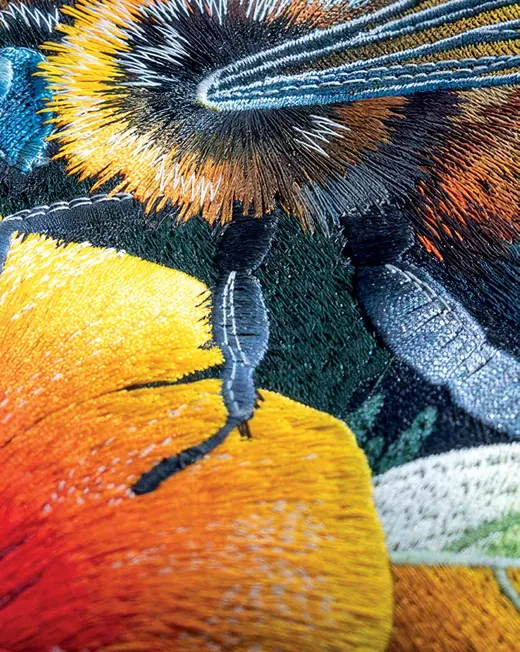
Gradients and photo-like art from one thread, dyed inline with Coloreel.
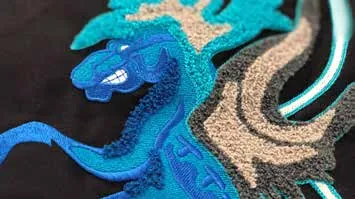
Varsity letters and soft, towel-like textures.
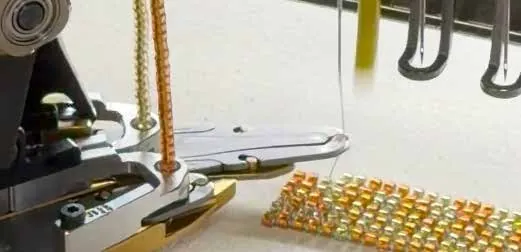
Sparkle applied by the machine, stitch by stitch.
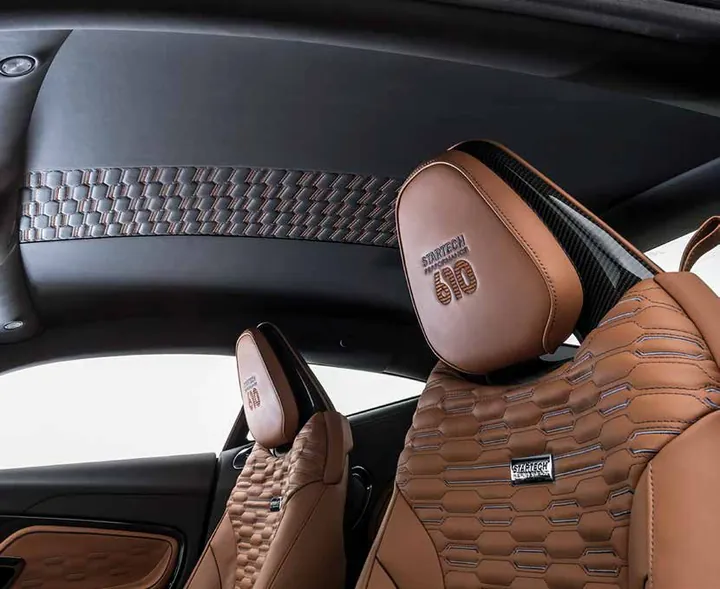
Monograms and decorative seams on leather goods, furniture and car interiors.
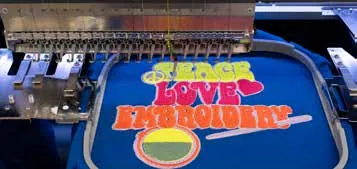
Heavy fabrics love thread.
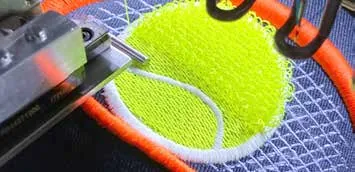
Terry-like pile you can feel.
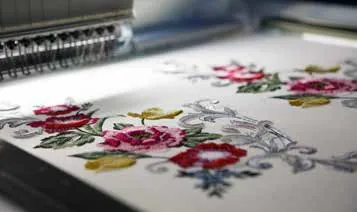
Florals, borders, bed linen.
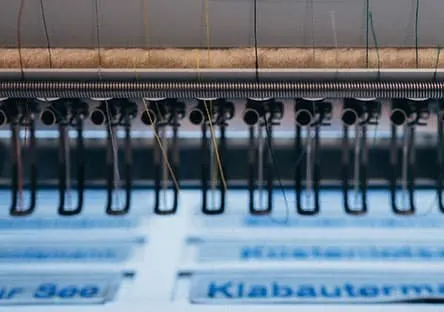
Lot size 1, name by name.
If a needle gets through it, you can sell it personalised.
For decades, textile decoration meant minimum quantities, warehouses full of guesses and leftover stock. Then digital printing and e-commerce met – and suddenly a single T-shirt could be designed, sold and produced only after someone clicked “buy”.
The first direct-to-garment (DTG) printer appears – printing digital images straight onto textiles.
CafePress launches: anyone can upload a design onto T-shirts and mugs – without holding stock.
Spreadshirt (Germany), Zazzle and Redbubble follow. White ink makes DTG work on dark garments.
Printful, Printify and Merch by Amazon plug production directly into Shopify, Etsy & co.
The pandemic pushes millions of creators and brands into online stores – POD becomes mainstream.
Customers expect personalisation. The question is no longer if on-demand works – it is which finish wins the premium segment.
The success of POD was never about ink. It was about a business model that removes risk – and a workflow that removes people from repetitive steps.
No capital tied up in stock, no dead inventory, no markdowns. Every product produced is already paid for.
Digital decoration made the first unit as cheap to set up as the hundredth. Long tail instead of best-guess bulk.
APIs connect Shopify, Etsy or custom shops to production. Orders arrive as data – not as emails and spreadsheets.
Names, numbers, photos, team logos. Customers pay more for products that tell their own story.
Artists, influencers, clubs and micro-brands launch merch with zero upfront risk.
Producing only what is ordered avoids overproduction – an argument that matters more every year.
Sources: Straits Research · SNS Insider · Printful – The evolution of POD
Because print alone is getting harder to differentiate. DTF made one-off printing cheap for everyone – embroidery is where the margin and the “wow” still are.
Embroidery is read as premium. The same hoodie with a stitched logo sells in a different price league – with the customer you already have.
Your customers already buy caps, polos and jackets somewhere. Offer them from the same shop instead of sending them to a competitor.
Structured caps, fleece, terry towels, knit beanies, bags, padded jackets, leather. Thread doesn’t care about the surface.
No pretreatment, no ink, no powder, no curing. Thread, backing, go – it runs right next to your printers.
3D puff, chenille, sequins, loop: texture is something the print shop down the road simply cannot fake.
Printed artwork with an embroidered logo or name on top. The most valuable product on your shelf combines both worlds.
Embroidery on Demand takes everything that made POD successful – zero inventory, no minimums, API-driven orders – and applies it to a finish customers instantly recognise as premium. The only thing you have to learn: thinking in thread instead of ink.
| Print on Demand | Embroidery on Demand | |
|---|---|---|
| Business model | Sell first, produce second | Identical – sell first, produce second |
| Look & feel | Flat, inside the fabric surface | Three-dimensional, tactile, light-reflecting thread |
| Durability | Can fade or crack over many washes | Colour-fast thread built to outlast the garment |
| Perceived value | Promotional, everyday | Premium, corporate, gift-worthy – supports higher price points |
| Colours | Millions of colours, gradients, photos | A defined set of thread colours per job (e.g. 12–24 needles) – or unlimited colours with inline thread dyeing |
| Artwork | Pixels (PNG, PDF), RGB/CMYK | Stitch file (DST, DSZ …) – generated automatically via Autopunch / Web API |
| Substrates | Mostly flat cotton apparel | Caps, hoodies, jackets, bags, towels, workwear, leather |
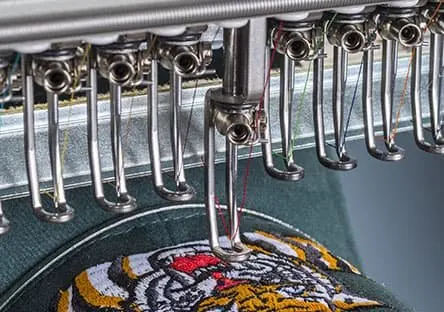
Print is seen. Embroidery is felt. That is why luxury brands, sports clubs and corporate wardrobes have always chosen thread for what matters most – the logo.
Satin, fill and 3D stitches create relief and light play no print can imitate.
Washes, sun and abrasion – embroidery keeps its look for the life of the garment.
Customers accept a clear premium for an embroidered name or logo.
Caps, fleece, heavy hoodies, leather goods – where print struggles, thread shines.
What the big platforms and trend reports say about on-demand right now – and why both arrows point towards embroidery.
Sources: Printful – Embroidery trends 2026 · Gelato – Custom embroidery · Teeinblue – POD trends 2026 · Printify – Future of POD
The biggest hurdle for print people: a HEX, RGB or CMYK value is not a thread. Enter a colour – or drop your artwork – and see how it translates into thread colours, measured with ΔE 2000, the perceptual colour difference used in professional colour management.
CMYK is converted without an ICC profile – fine for orientation, not for proofing.
ZSK heads carry 12 to 24 needles: 12 on the SPRINT NX, 18 on the SPRINT 9, 24 on the SPRINT 7 MAX and SPRINT 9 MAX. Fewer colours mean fewer colour changes.
Colour values are screen approximations of the manufacturers’ thread charts (open-source Ink/Stitch palettes). Always confirm with a physical thread card. In production, ZSK Terminal maps design colours to what is loaded on each needle – Thread Cone Matching.
Thread does not do dots. Gradients become blends of stitch density – or are simplified into steps.
Lines need width for the stitch to hold. Very thin details get thickened or dropped.
Small text is the classic print-to-thread trap. Keep names and lettering legible in stitches.
Reduce colours deliberately – or dye the thread inline with Coloreel for gradients and photo-like designs.
The all-round embroidery thread: strong coverage, high sheen, fast production. Right for logos, fills, 3D puff and lettering from about 5 mm height.
Roughly a third thinner. With a finer needle it stitches small text down to about 3 mm, thin outlines and delicate details – the answer when a print file has tiny type.
If you run POD, you already know the pattern: shop → API → production. Embroidery on Demand follows the same digital chain – the stitch file is created and routed automatically.
Customer personalises a product in the shop and sees a photorealistic preview.
TrueViewThe shop sends text, font or image via REST to the ZSK Web API – cloud or on-premise.
Web APIAutopunch turns images into embroidery files; monograms are generated instantly.
AutopunchJobs queue with machine assignment, frame and colours – needles matched automatically.
Terminal · PlannerNetwork push or barcode scan – the machine loads the right job and starts.
SPRINT · RACERLive dashboards, thread-break analysis and productivity per machine and shift.
MY.ZSK StitchTwin ↗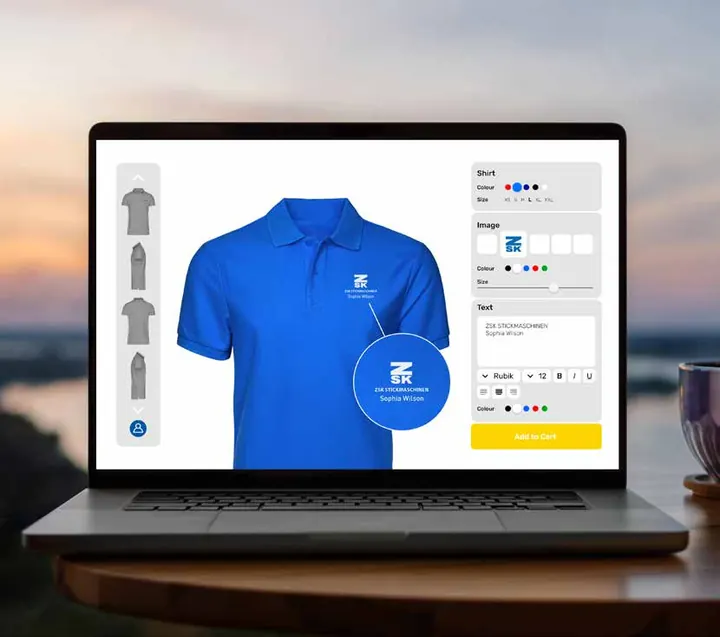
Send a name and a font – receive a production-ready stitch file. Developers who have integrated Printful or Printify will feel at home: REST, JSON, PNG preview. Choose a ZSK-hosted cloud setup with zero maintenance or run it on your own servers for full data control.
// ZSK Web API – monogram → stitch file
POST https://your-zsk-server/StitchJob
{
  "RequestType": "CreateDSZ",
  "Monograms": [{
    "Text": ["EMMA"],
    "FontFamily": "Arial",
    "FontSizeMM": 15
  }],
  "Needle": [{
    "ColorName": "Navy",
    "ThreadSize": "40"
  }]
}
// → .dsz + PNG preview
On-demand means many short jobs, constant design changes and every product type – caps, tubular garments, flat goods. ZSK’s new generation – SPRINT 9, SPRINT R9 and RACER Compact TWIN – was designed exactly for that. Made in Krefeld, Germany.
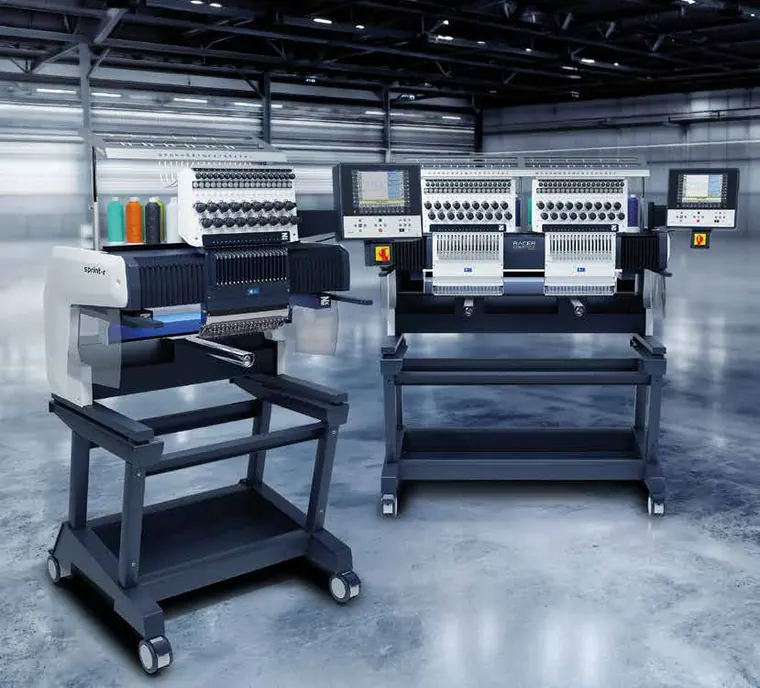
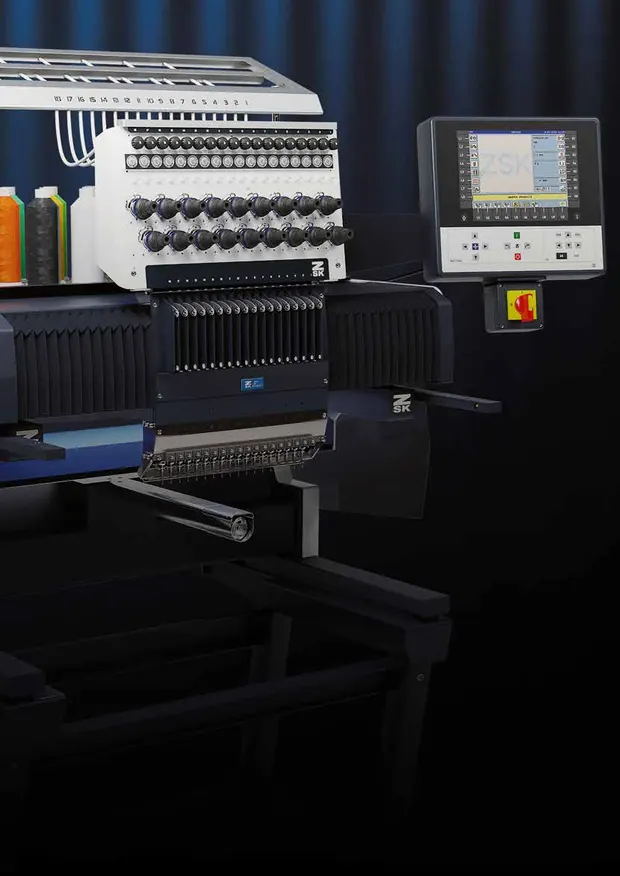
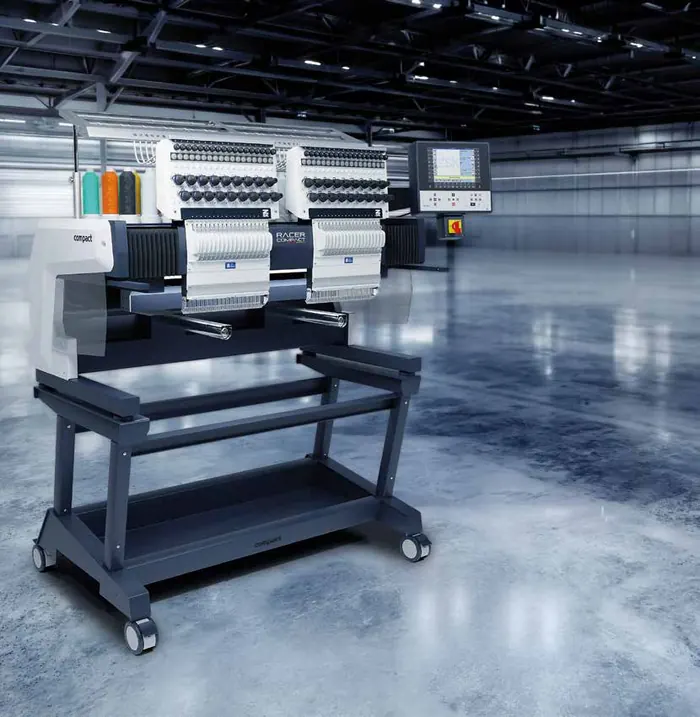
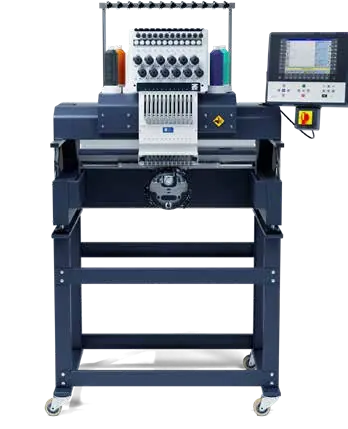 StartSPRINT NX or SPRINT 9 covers initial on-demand capacity.
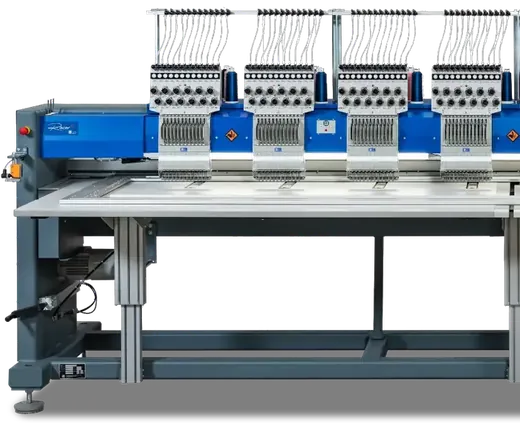 ScaleRACER Compact TWIN and multi-head RACER for volume.
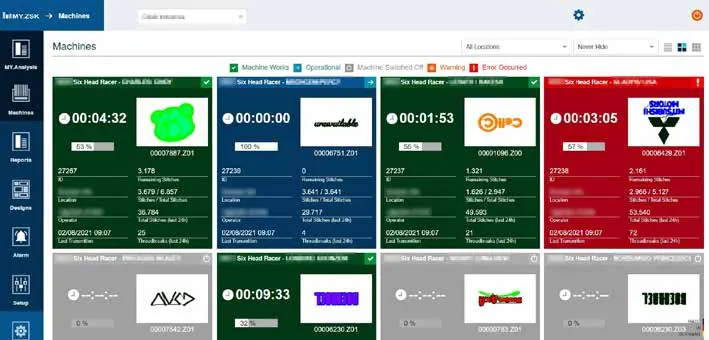
On-demand lives on small margins per piece. MY.ZSK turns your machine park into data: status, stitches, thread breaks and efficiency in real time, on any device – and via the MyZSK API straight into your own systems.
Status, stitch counts and efficiency of every machine – in the browser, from anywhere.
By design, machine, head and needle – spot creeping problems before they stop production.
REST access to OEE, stitch counts, runtime, thread breaks and utilisation – feed your own dashboards, ERP or shop.
OPC UA for Industry 4.0 environments and open interfaces to ERP systems and shop platforms.
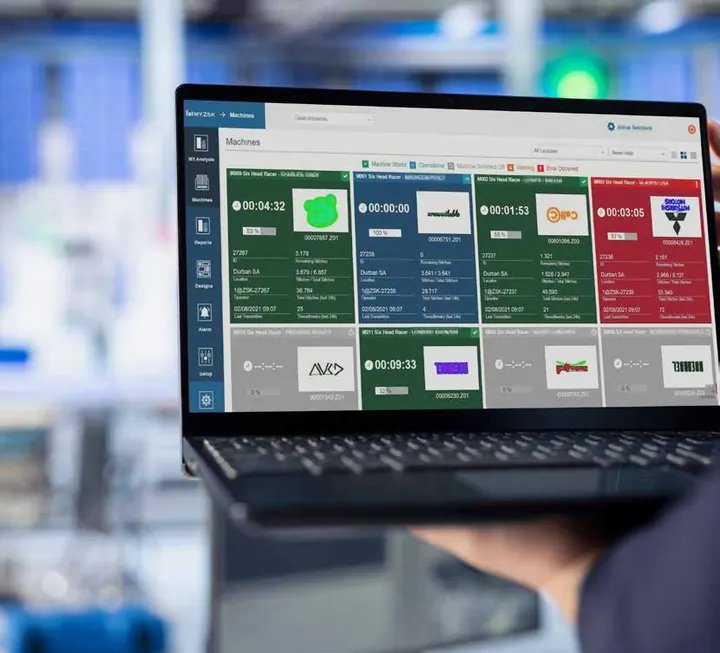
ZSK develops machines, software and connectivity in-house. That is what makes a closed, automated Embroidery on Demand chain possible.
REST interface from your shop to embroidery – monograms, images, previews. Cloud or on-premise.
Converts customer images into stitch files automatically, with PNG preview for instant approval.
Photorealistic previews and product images of caps, shirts and more.
Design Stock, EasyText, Converter, PhotoStitch – the hub of your embroidery production.
Maps every design colour to the needle that carries it on each machine. Right thread, every time.
Status, machine assignment, frames and colours for each order – integrates with ERP and CRM.
Live dashboard, shift analysis, thread-break analysis – plus API for your own data hub.
Projected positioning for hooping – every placement identical, even with untrained staff.
Personalised embroidery in the online shop with real-time preview.
RACER + Web API + Autopunch + MY.ZSKIndividual corporate embroidery for events and staff outfitting.
SPRINT + Terminal + Web APILogos on workwear in different sizes and positions.
RACER II + Barcode + Head SelectionNames and numbers for whole teams, piece by piece.
SPRINT + Team Name + Fast Colour ChangeMonograms and individual designs on leather goods.
RACER XL + OPS 2 + Custom FramesEmbroidery on Demand means a product is only embroidered after a customer has ordered it – often personalised with a name, logo or design. The order flows from the online shop via an API into production, the stitch file is generated automatically and the job is sent to the embroidery machine. No inventory, no minimum order quantity.
The business model is the same – sell first, produce second. The difference is the finish: embroidery is three-dimensional, extremely wash-resistant and perceived as higher value, so it supports higher price points. In exchange, designs must be translated from pixels and ink into stitches and a limited set of thread colours.
Each colour is converted into CIELAB and compared with a thread colour chart using ΔE 2000. The thread with the smallest ΔE is the closest match – below about 2 the difference is barely visible, above about 5 it is clearly visible. A design is also reduced to the number of available needles, e.g. 12–24.
Not for standard jobs. Names and monograms are generated directly via the Web API; images and simple logos are converted by Autopunch. Complex brand logos are digitised once in BasePac or EPCwin and then reused automatically for every order.
Yes. The ZSK Web API is a REST interface: your shop sends the personalisation, receives a preview and a stitch file, and the job lands in production planning. Machines receive it via network push or barcode scan.
Most on-demand businesses start with a single-head SPRINT 9 or SPRINT R9 – it handles caps, hoodies, tubular and flat goods. Capacity grows with additional SPRINTs, the two-head RACER Compact TWIN or multi-head RACER machines, all in the same network.
Book a live demo in Krefeld or online: we connect a test order from your shop to a ZSK machine and stitch your first on-demand product.
Request a demo or write to zsk@zsk.deFive short fields – we will get back to you personally.